LEGO City News
LEGO City News: Space Program
A report on LEGO City's rebuilt Space Launch Rocket, its updated launch pad, and the first three missions.
October 6, 10:00 a.m. (LEGO City time)
“Shhhhh! RUUUUM-BLE! ROOOAAARRR!” LEGO City’s Space Launch Rocket (SLR) Two, Mission Three, has officially launched. The third launch in the sequence marks one of the most remarkable unmanned missions of the latter half of the century. Here’s what happened…
The LEGO City Space Launch Program had been stalled for many years, especially after one of its major rockets crashed. Now, with enough funding to rebuild a rocket, the space program has started up again.
The Rocket
The rocket is a remodeled SLR-1 with a new launch escape tower and a second-stage booster.
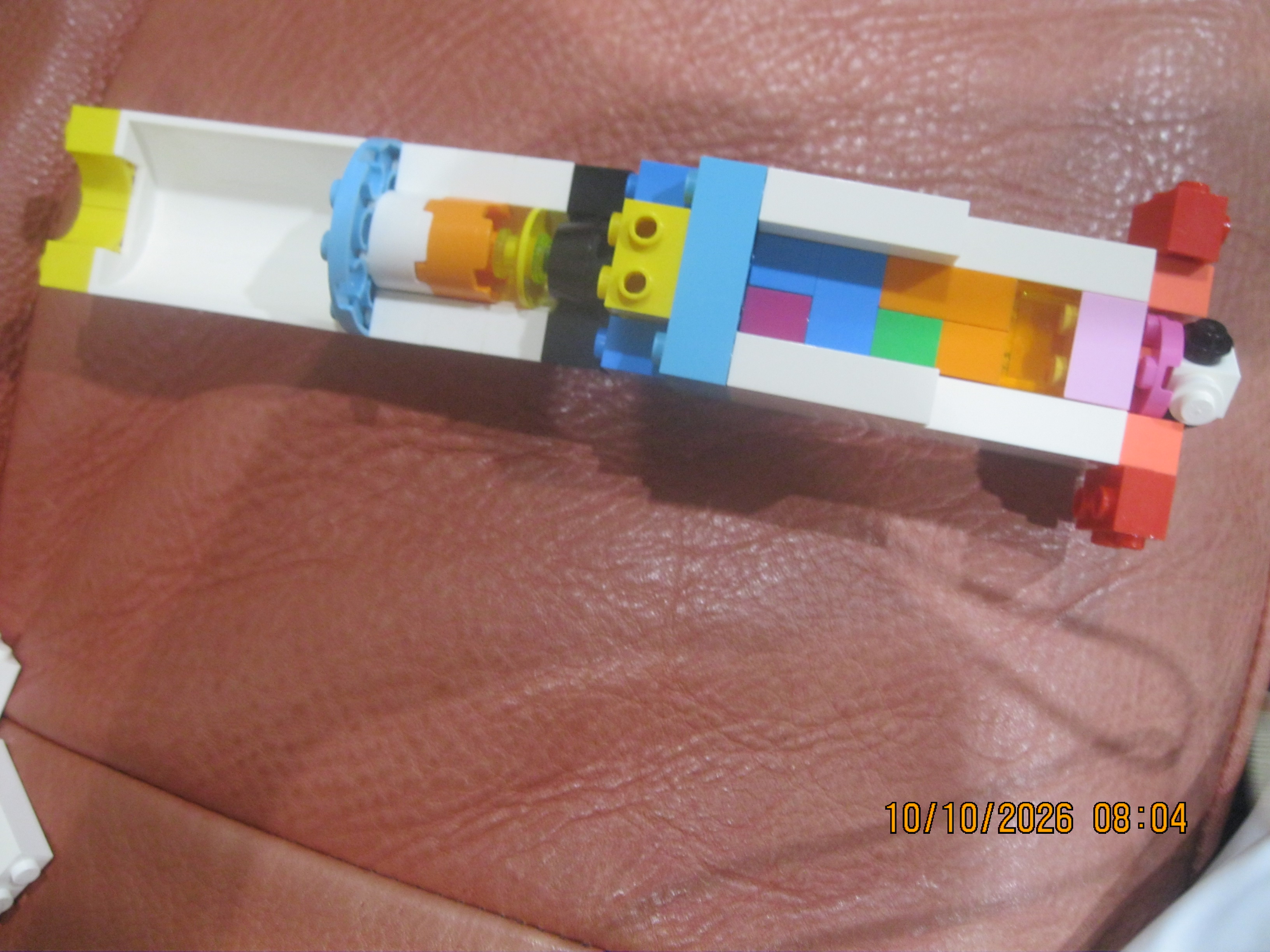
Here are its parts:
- Bottom stage: This boxy stage uses solid fuel made from natural resources. It also has four liquid-fueled landing boosters. They help the rocket land at a site where it can be recovered more easily, preventing it from being destroyed on impact.
- Second-stage (upper-stage) engine: This engine is liquid-fueled. It works well in the airless vacuum of space. Early missions, however, did not realize that it was designed for high-altitude flight.
- Payload container: The payload container can carry much larger loads than earlier rockets. It can hold large satellites and enough supplies for a crew of four to live on the space station for six months.
- Nose cone and command module: The nose cone is highly heat-resistant, and the command module is shaped like the Apollo command modules. The solid-fuel launch escape tower can pull the command module nearly a mile into the sky.
Earlier versions took advantage of this component’s heat resistance and used it as a missile. It could travel at very high speeds and create a powerful blast without burning up. Now, it serves as the top of the neutral space program’s rocket.
These rocket systems pack a powerful punch: the entire upper stage, except for the engine, can travel all the way to Mars!
The Launch Pad
The launch pad was also updated. Here are the main changes:
- The launch pad’s location: The old pad was in a very popular area, affecting nearby neighborhoods. The new one is very remote, so nobody knows the rocket has launched until it sends out its satellite.
- The flame trench: The old launch pad had no flame trench. After each launch, it was badly damaged and needed extensive repairs before it could be reused. The new pad has a flame trench, so it takes almost no damage.
- The launch tower: The old launch tower was attached directly to the rocket, and several of the five missions ended with the rocket crashing into the tower. The rocket, launch pad, and surrounding area then needed repairs, which used up a lot of the budget. The new design has a special decoupler, allowing the rocket to move away from the tower during launch instead of crashing into it.
SLR stands for Space Launch Rocket.
The Missions
The space program has already completed three missions. Here is a summary:
| Mission | Status | Objective and result |
|---|---|---|
| One | Successful | Deploy a satellite. It orbited for one year. |
| Two | Slight failure: the equipment failed to work. | Deploy a lander on Mars. The lander could not start. |
| Three | Successful, but the rocket was heavily damaged. | The rocket landed on Mars, collected the sample, and headed back to Earth. It crashed on landing, but the sample was untouched. |
Loading comments...